
Monthly Archives: January 2026

contract pharmaceutical manufacturing companies

Why Pharma Brands Rely on Contract Pharmaceutical Manufacturing Companies for Quality Manufacturing?

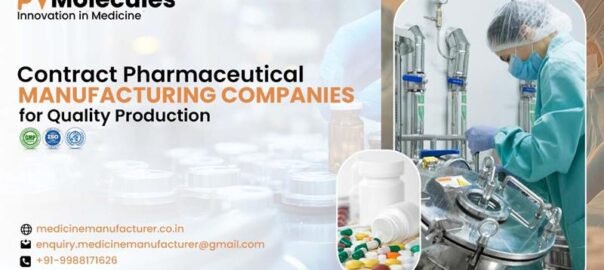
The pharmaceutical industry will experience a significant transformation, which will continue until the year 2026. Presently, pharmaceutical companies choose contract pharmaceutical manufacturing companies to handle their complex manufacturing requirements. This system allows brands to concentrate on their research and development and marketing activities. The specialists handle the task of ensuring that all drugs meet international safety requirements for production. Furthermore, India has become the world leader in this approach, thanks to their expertise. As a result, the Indian pharma market is expected to touch a level of ₹5,00,000 crore in the current year.

This way, pharma brands get a competitive advantage by leveraging the best of external, cutting-edge facilities. Specifically, this collaboration enables the provision of reliable and quality healthcare solutions to patients on a consistent basis. Selecting the best contract manufacturing companies safeguards the reputation of a brand and helps in long-term growth.

Ensuring Product Excellence through WHO-GMP Certified Production

Today, quality is the prime concern for any pharma brand. In fact, the majority of contract pharmaceutical manufacturing companies hold prestigious WHO-GMP certifications. This enables them to produce safe and high-quality products that meet international standards. For instance, WHO-GMP-certified units implement strict raw material testing and cleanliness standards, which lead to a major decline in contamination and dose-related discrepancies.

Brands choose the best contract manufacturing companies for the proof of excellence they provide, which helps in developing trust among doctors & patients. Moreover, strict quality systems prevent costly recalls and ensure that life-saving medicines remain safe and effective for all.

Capitalizing on Advanced Infrastructure and Technical Expertise

Access to Cutting-Edge Technology

Brands can use advanced technology through their existing operations without the need for substantial capital investments. Additionally, automated technology at advanced facilities verifies production quality through its operation in every production batch.

Specialized Technical Workforce

Expert teams address complex formulation with their extensive experience which they developed through their dedicated work on medical advancements & modern manufacturing methods. Therefore, they provide a distinct advantage to the brand.

Scalable Production Capabilities

Top contract manufacturers have flexible production capacity, easily scaling up to meet sudden spikes in demand. Consequently, brands can remain agile in a shifting market.

More Investment in Research

The company uses outsourcing because it enables financial resources to develop new drugs, which partners will produce through their daily manufacturing work. In other words, it streamlines the focus toward innovation.

Faster Time to Market

The company works with experienced partners who improve manufacturing processes to help them launch products faster. Accordingly, this enables them to compete effectively in the 2026 market.

Balancing Cost-Effectiveness with Strict Quality Control

Lower Capital Outlay

The company saves millions by avoiding the construction of an in-house plant. Instead, this enables them to allocate more resources toward branding and expanding their market presence.

Lower Operational Costs

Brands need to maintain operations because they do not require large-scale recruitment and training. Their top contract manufacturers manage all staff members and essential resources.

Bulk Raw Material Procurement

Because contract pharmaceutical manufacturing companies procure raw materials in massive quantities, the costs are significantly lower. This trickles down to the brand, reducing the cost per unit.

Reduced Regulatory Compliance Overhead

Meanwhile, the contract manufacturer handles the complex paperwork for government inspections. This reduces the legal burden and overhead for the pharmaceutical brand.

Easy Access to International Export Markets

Collaborating with a certified manufacturer makes it easy to export pharmaceuticals across the globe. Indeed, contract pharma manufacturing ensures the necessary global compliance for a successful international trade.

Final Thoughts 

By 2026, partnering with experts has become an essential part of the industry. Ultimately, contract pharmaceutical manufacturing companies maintain a balance between quality, speed, and cost-effectiveness. Pharmaceutical brands use advanced technology and WHO-GMP standards to develop their healthcare products. In addition, this approach allows businesses to scale without the massive burden of company management. 

PV Molecules is one such exemplary leader in this domain, providing trustworthy solutions for today’s brands. As the industry grows, such contract pharma manufacturing collaborations will continue to define the future of medicine. Choosing the right partner today will ensure a healthier and more prosperous tomorrow for the entire industry.

Frequently Asked Questions (FAQ)

Q1: Why is WHO-GMP certification essential for a contract manufacturer?

It ensures that the drugs are manufactured and controlled according to international quality standards.

Q2: What level of financial savings can a brand expect from outsourcing?

Brands can make savings of up to 30% in capital expenditures.

Q3: What factors make India a top choice for pharmaceutical outsourcing?

India provides highly skilled manpower and world-class facilities at an affordable cost.

Q4: Can a brand rely on contract partners for the final packaging of products?

Yes, they offer end-to-end services, including formulation, primary packaging, and final labeling.

Q5: What is the typical timeframe for starting a new production cycle?

It takes 4 to 8 weeks to initiate production after the final agreement is signed.
Third Party Pharma Manufacturing

What Is Third Party Pharma Manufacturing & How It Works In India?

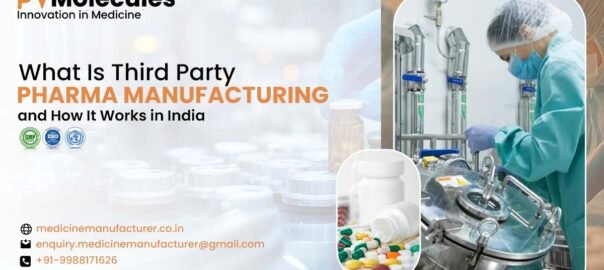
The Indian pharmaceutical market is undergoing a transformative period because of the popularity of an economical production model. Furthermore, for your successful brand development in 2026, finding a trustworthy pharma manufacturing company is the most critical step. This resource will aid you in understanding how outsourcing can be beneficial to your profit margins and efficiency. Thus, it is important to analyze how this outsourcing model avoids having to make a huge investment in a company.
Selecting a specific partner for your pharmaceutical products ensures that your products comply with global safety and quality parameters. The Indian pharmaceutical market, which is currently huge, is expected to reach a value of ₹4,71,295 crores by 2026.

What Is Third Party Pharma Manufacturing in India?

Third-party pharmaceutical manufacturing is an excellent business model in which the branding firm enters a contract with a third-party pharma manufacturing company. Essentially, you own the trademark as well as the marketing rights for the medications available under it. Hence, the pharmaceutical manufacturing firm is responsible for their production.
This business model is widely popular in India because by outsourcing third party pharma manufacturing, you don’t need to own any manufacturing. This includes machines or land, as the manufacturing company will utilize its own WHO-GMP-certified manufacturing units to produce your tablets, capsules, or syrups.

How Does Third Party Pharma Manufacturing Work Step by Step?

Product Selection Phase with Digital Assistants

The first step involves completing a list of drug molecules and compositions for which you want to set up a business to sell. Next, you have to take a quotation from a reputed pharma manufacturing company facility to know the cost per unit. The cost would comprise the price of raw materials, packaging, and manufacturing. The initial investment for a limited product range in 2026 would start from around ₹2,00,000 to ₹5,00,000.

Documentation and Compliance Approval

Even before production begins, you need to fulfill the legal formalities by doing the required paperwork. You need to provide the Wholesale Drug License and GST registration for the pharmaceutical manufacturing companies. You also need to decide on the final name of the product and the packaging graphics as per the guidelines of the DCGI. This procedure involves a final manufacturing agreement based on the required standards of the product and the time of delivery.

Packaging Design & Artwork Finalization

After the legal processes are complete, it is necessary to focus on developing the visual identity for your medicine brand. Specifically, you can work together with the pharma manufacturing company to design visually appealing packages for medicines. It is necessary to keep in mind that there is a requirement for composition, batch number, as well as the date of expiry, as per Indian law. As package design has shaped the public idea of brands in general, leading many organizations to turn to alu-alu or blister packages.

Manufacturing & Quality Testing Phase by Top Pharma Manufacturers

Once this process is complete, the actual production begins in the manufacturing units. The pharmaceutical manufacturing companies procure the active ingredients and process them using the latest machinery. In addition to this, the products go through quality tests in a lab to ensure that they are safe and effective.
This process ensures that the medicine produced complies with the standards of WHO-GMP and ISO when it leaves the company. Therefore, choosing from the top pharma manufacturers ensures global compliance.

Final Delivery and Logistics Coordination

Following successful testing, we pack the products and prepare them for shipping. The best pharma companies will normally coordinate with logistics companies in order for the products to reach your warehouse. The first order normally takes about 45 to 60 days, but for repeat orders, it is very fast. You can distribute the products to your chemist network after restocking.

Who Can Opt for Third Party Pharma Manufacturers in India?

  • New entrepreneurs wanting to build a pharmaceutical brand with limited capital.
  • Franchise owners of existing PCDs who wish to venture into third party manufacturing pharma.
  • Large pharmaceutical manufacturers require additional capacity for in-demand medications.
  • Businesses that offer marketing services aim to serve various markets.
  • Healthcare practitioners, such as doctors or pharmacists, want to establish their own medical labels.
  • Export businesses that appeal to the global market with Indian generic drugs.
  • Businesses are looking to partner with reliable third party pharma manufacturers.

What Are the Main Benefits of Third Party Manufacturing in India?

One of the main benefits of this model is the considerable lowering of operational expenses. You do not have to spend crores of rupees on land acquisition, building development, and skilled manpower.
Rather, you can employ the knowledge of the best pharma companies that have already been optimizing their supply chain. This way, you can easily turn your high capital expenditure into operational expenses. By collaborating with a trustworthy company such as PV Molecules, you can easily establish the credibility of your brand.
Additionally, the third party manufacturing pharma business offers immense flexibility to keep up with market trends. If a certain molecule is a success, you can easily place an order for that without having to make any changes to manufacturing.
The pharma production company takes care of all complexities related to regulatory issues, changes to Schedule M, and more. Consequently, partnering with third party pharma manufacturers allows you to focus purely on market expansion.

Conclusion

Partnering with third-party pharmaceutical manufacturers is the most effective strategy for entering the healthcare market in 2026. This model offers the lowest possible risk levels coupled with high growth rates. This strategy is the most effective for current pharmaceutical business leaders. Partnering with a compliant pharma manufacturing company guarantees that every dose administered on the market meets the required safety and effectiveness levels. If you are particular about quality and integrity, partnering with PV Molecules can offer you the needed tech expertise.

Frequently Asked Questions (FAQ)

Q1: What is the typical Minimum Order Quantity (MOQ) required for outsourcing production?
Typically, the MOQ for most manufacturers for tablets and capsules will range from 500 to 1,000 boxes per batch.

Q2: How much time is generally needed to receive the first shipment of medications?
The time taken for the initial production is normally 45 to 60 days, depending on documentation, and for repeated orders, it is 30 days.

Q3: Can entrepreneurs manufacture herbal or Ayurvedic items through contract partners?
Well, yes, many specialized units are offering herbal and Ayurvedic manufacturing under valid AYUSH and FSSAI licenses in India.

Q4: Is it necessary to own a production facility to launch a private pharmaceutical label?
No, you just need a wholesale drug license and a GST number to employ the contract manufacturer.