
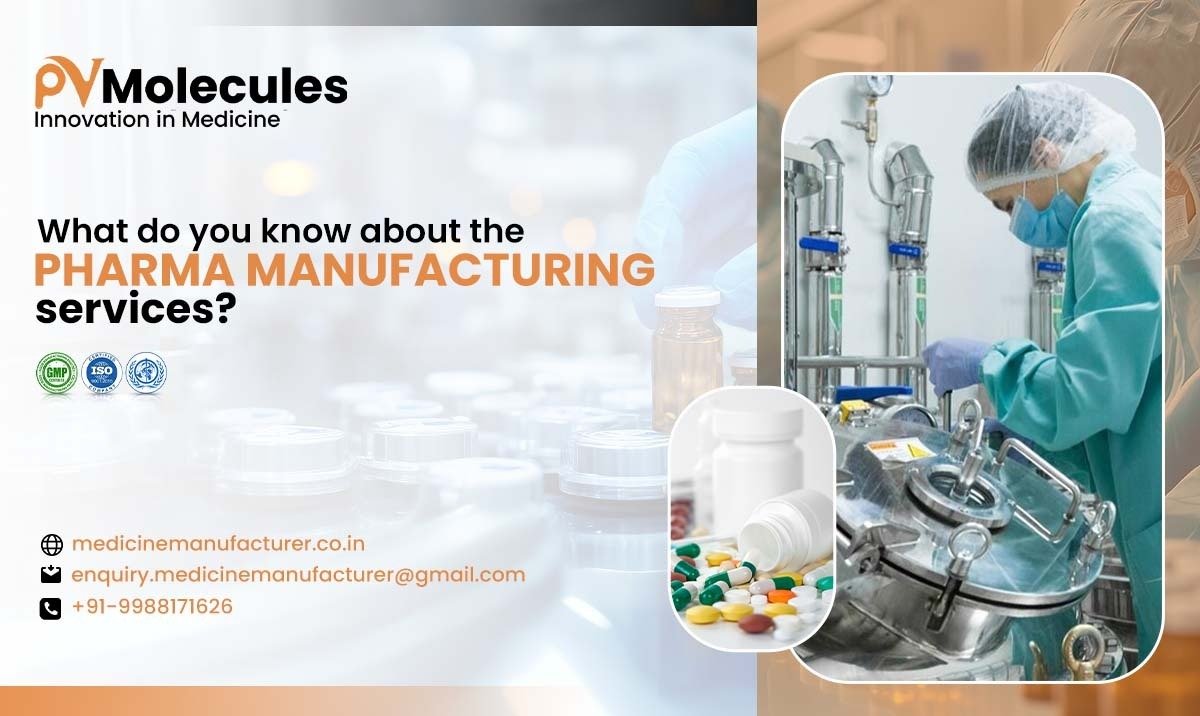
What is Pharmaceutical Manufacturing?
Pharma manufacturing firms are companies that produce medicines and healthcare products on a commercial scale. These firms develop, formulate, test-, manufacture, package, and distribute pharmaceutical products such as tablets, capsules, syrups, injections, ointments, and more. In this business model, the organisation operates its brand products while offering third-party manufacturing to pharmaceutical companies and PCD franchise businesses. Even with this, prescription medicine manufacturing firms in India supply affordable and high-quality medicines, which they distribute to both domestic and international markets. Along with this, these firms follow strict regulatory requirements to ensure product safety and quality and effectiveness. Consequently, in today’s pharma products manufacturing industry, there is a huge demand for these services from expert firms.
Types of Pharma Manufacturing Services
In India, the well-developed Pharma items manufacturing firms provide a wide range of services depending on their infrastructure and expertise. Thus, the main services they provide include the following:
1. Third-Party Manufacturing
Companies manufacture products for other brands under contract agreements. This production method enables businesses to develop new products without needing to build their own production facilities.
2. Manufacturing for the PCD Pharma Franchise
Manufacturers give PCD franchise partners medicines along with marketing help, exclusive rights, and advertising materials.
3. Development of Formulations
The expert teams make and design new drug formulations that are stable, effective, and meet all regulatory requirements.
4. Making drugs in large quantities (API)
The process of making the product makes active pharmaceutical ingredients, which are used to make the final product.
5. Making things that can be injected
The process makes sterile injections, such as dry powder injections, liquid injections, and IV fluids.
6. Making herbal and nutraceutical products
The process of making things makes protein powders, dietary supplements, syrups, Ayurvedic products, and wellness products.
7. Services for packaging and labeling
The company offers packaging solutions that meet the law and make the brand more visible.
Why is it important for pharmaceutical companies to have WHO-GMP certification?
The World Health Organization’s Good Manufacturing Practice (WHO-GMP) certification sets a standard for quality that is accepted around the world. This makes sure that pharmaceutical products are always made and handled correctly according to established quality standards.
Main Reasons What Makes WHO-GMP Certification Important:
1. Protecting the quality and safety of products
WHO-GMP-certified facilities keep the integrity of their production by following standard procedures that include quality checks and hygiene rules. These procedures are used at every stage of production to lower the risk of contamination and defects in the product.
2. Organizations Must Adhere To Regulatory Requirements
The certification establishes pharmaceutical companies’ adherence to both domestic and international drug development standards.
3. The organization builds trust with the market
The public trusts medicines made in facilities that hold WHO-GMP certification because those facilities produce drugs that meet international pharmaceuticals quality standards.
4. The Organization Needs WHO-GMP Certification To Export Pharmaceuticals
Many countries require pharmaceutical products to meet WHO-GMP standards before they will permit their importation. Thus, these certifications enable companies to enter global markets.
5. The Certification Enhances Business Reputation
Companies that achieve WHO-GMP certification gain increased trust from customers who compare their organization with other businesses in India’s competitive marketplace.
What Infrastructure Is Required for a Modern Pharmaceutical Manufacturing Unit?
Modern pharmaceutical manufacturing companies always need advanced infrastructure, which enables them to maintain product quality standards, operational safety measures, and all regulatory requirements. WHO-GMP guidelines dictate the design of these facilities, ensuring proper space segregation for raw materials, production, quality control, and finished goods storage. These companies operate their Cleanrooms under controlled temperature, humidity, and air pressure systems (HVAC) requirements. As a result, their layout establishes the essential conditions that safeguard product integrity.
Additionally, these facilities use advanced equipment for tablet compression, capsule filling, liquid filling, ointment preparation, and injectables. Moreover, their Quality Control (QC) and Quality Assurance (QA) laboratory must have all necessary testing equipment to support product quality control. Lastly, The organization needs warehouse facilities and water purification systems, power backups, waste disposal systems and trained technical staff. All of this equipment thus aids them in making sure that operational procedures run smoothly and satisfy regulatory standards.
What Therapeutic Areas Do Pharma Product Manufacturing Companies Work In?
pharma product manufacturing companies make a wide range of therapeutic products to meet the different needs of patients. These parts are based on types of diseases and medical fields. The following are the main areas of medicine that pharmaceutical companies work in:
1. General Medicine (GP Range)
This includes medicines that are often given for colds, coughs, digestive problems, fevers, and infections. There are tablets, capsules, syrups, and suspensions that are used in everyday medical practice.
2. Antibiotics and drugs that fight infections
To treat bacterial and viral infections, drug companies make antibiotics, antifungals, antivirals, and antimalarial drugs. This is one of the biggest and most important parts of the pharmaceutical industry.
3. Cardiac & Diabetic Range (Cardio-Diabetic)
This segment includes medicines for:
- Hypertension
- Heart diseases
- Cholesterol management
- Diabetes (oral hypoglycemics and insulin support drugs)
- Due to lifestyle changes, this segment is growing rapidly.
4. Neuropsychiatry
Covers medicines used to treat:
- Depression
- Anxiety
- Epilepsy.
5. Orthopedic Range
Includes medicines for:
- Joint pain
- Arthritis
- Muscle relaxants
- Calcium supplements
Why should PV Molecules be chosen for the production of pharmaceutical products?
PV Molecules is the best pharma manufacturing service since it provides high-quality products and reliable services. Our company produces safe and effective medications in WHO-GMP-certified facilities. We sell pills, capsules, syrups, and dry syrups for medicinal treatments. We ensure that both startups and established pharmaceutical enterprises can order medicines at low prices from our firm. In addition to this, our company offers complete product development, private brand manufacturing, packaging, and government compliance support. Moreover, these services, our on-time delivery and strict quality assurance enable enterprises to launch products quickly and achieve growth. Thus, you can strongly believe in the third-party manufacturing services from our company.
Finalization moment
India’s Medicine manufacturing services are in high demand due to developing domestic and worldwide markets. Because individuals understand healthcare better, more people have chronic ailments, and medical facilities are more accessible, medicine consumption rises. Multinational corporations trust India to produce low-cost, high-quality medications, leading them to establish manufacturing plants there. Furthermore, Government programs like the Production Linked Incentive (PLI) and tight quality control help the sector. Even with this, Generics, injectables, nutraceuticals, and specialty medications will drive sustained growth and business success in the Indian pharma medicines manufacturing sector. Thus, in the search for the right partner in this sector to grow your business, you should only need to start with PV Molecules.
Frequently Asked Questions
1. What is pharmaceutical manufacturing?
This manufacturing involves producing medicines that exist in multiple forms, including tablets and capsules and syrups and injections and ointments, through regulated processes.
2. What certifications should a pharma manufacturer have?
To keep the quality and safety of their products high during the manufacturing process, a reliable manufacturer must follow WHO-GMP standards set by the World Health Organization.
3. Do pharma manufacturers offer third-party manufacturing?
Yes, multiple manufacturers offer contract manufacturing services, which enable pharmaceutical brands and PCD franchise companies to use their production capabilities.
4. How long does production take?
Production takes different times, which typically last between 15 and 30 days because product specifications and manufacturing volume determine the timeline.